

Published May 22, 2026 · Last updated August 4, 2026 · 9 min read
Most people do not have a filing problem. They have a finding problem. Documents are saved, they are just saved as scan_0043.pdf in a folder called Downloads, alongside four hundred others. This is a filing system simple enough to survive a busy year — five rules, no software, no subscription.
Why a system beats good intentions
Search only helps when you remember what to search for. Scanned documents often contain no searchable text at all, so a scan with a meaningless filename is effectively invisible. A naming convention turns your file browser into an index that sorts itself.
The system also has to be cheap to follow. Anything requiring more than a few seconds per document gets abandoned in the first busy week.
Rule one: date first, always
Start every filename with the date in ISO format: 2026-08-04. Files then sort chronologically by default in every operating system, with no effort from you.
| Bad filename | Good filename |
|---|---|
| scan_0043.pdf | 2026-08-04-invoice-acme-1204.pdf |
| Contract final FINAL v3.pdf | 2026-07-19-supplier-agreement-signed.pdf |
| IMG_2291.pdf | 2026-06-02-receipt-train-lahore.pdf |
Use the date the document is dated, not the date you saved it. That is the date you will remember.
Rule two: merge related pages immediately
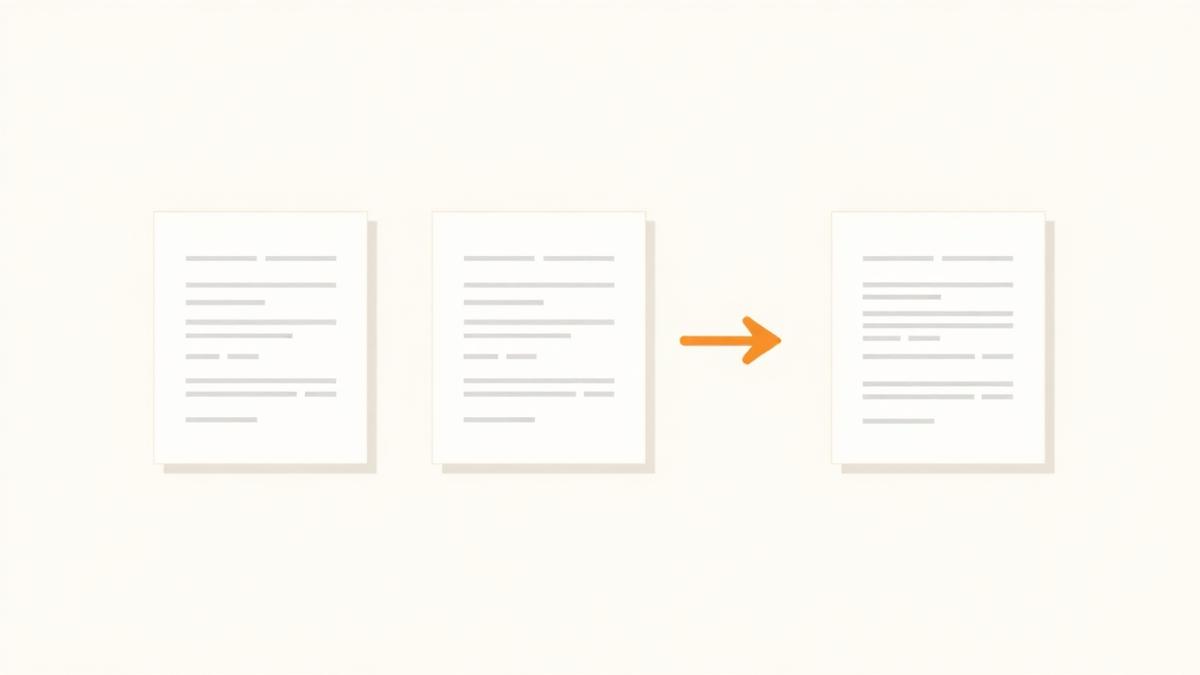
A contract and its two annexes belong in one PDF, not three. So does a two-page invoice that arrived as separate scans. Merging at the moment of filing costs ten seconds; reassembling a set two years later costs an afternoon.
Use Merge PDF and drag the cards into the correct order before combining.
Rule three: strip what you do not need
Fax cover sheets, blank scanner pages, duplicate signature pages and marketing back covers cost you time on every future read and space in every backup. Remove them once with Delete PDF Pages, and fix any sideways scans with Rotate PDF while you are there.
Rule four: make status visible
A document's state — Paid, Approved, Draft, Superseded — is invisible inside a PDF unless you put it there. A stamp on the first page tells you in one glance what would otherwise require reading. The Stamp Creator lets you save a set of status stamps once and apply them in a single click afterwards.
For circulating drafts, a light diagonal watermark applied with Watermark PDF prevents the classic mistake of someone acting on an unapproved version.
Rule five: archive quarterly, not annually
Small batches are quick. A year-end backlog never gets done. Four times a year, move the completed quarter into a dated archive folder and back it up.
- Create a folder named 2026-Q3.
- Move every completed document from the working folder into it.
- Skim the filenames — anything unclear gets renamed now, while you still remember it.
- Copy the folder to a second location: an external drive, or a synced folder.
- Leave the working folder empty for the new quarter.
A folder structure that scales
- Finance — invoices, receipts, statements
- Contracts — agreements, annexes, amendments
- Personal — identity documents, medical, education
- Property — tenancy, utilities, maintenance
- Archive — dated quarterly folders
Five top-level folders is usually enough. Deep nesting feels organised and makes documents harder to find, because you have to remember which branch you chose.
Real-world example: a freelancer's month
Invoices are exported as 2026-08-04-invoice-client-name.pdf and stamped Paid when settled. Receipts photographed on the phone are converted with JPG to PDF into one file per month. Signed contracts go into Contracts with the signed suffix, and the unsigned original stays alongside. At the end of September, the whole lot moves into 2026-Q3 and is backed up. Total effort: a few minutes a week.
Common mistakes
- Version names that do not sort: final, final2, FINAL-real. Use dates instead.
- Filing scans without checking they are legible and the right way up.
- Building a folder tree six levels deep that nobody can navigate.
- Keeping the only copy in a downloads folder that gets cleared automatically.
- Deleting the original after compressing or flattening a document.
Best practices summary
| Habit | Time cost | Payoff |
|---|---|---|
| Date-first filenames | 5 seconds | Automatic chronological order |
| Merge related pages | 15 seconds | One document instead of a scattered set |
| Remove junk pages | 20 seconds | Smaller, faster, easier to read |
| Status stamps | 5 seconds | State visible without reading |
| Quarterly archive | 15 minutes | No year-end backlog |
Summary
Date first, merge related pages, strip what you do not need, stamp the status, and archive quarterly. Five rules, a few seconds each, and a document library you can still navigate in three years. The tools you need for all of it are free and run in your browser.
Frequently asked questions
- What is the best filename format for documents?
- Start with the ISO date, then the document type, then the counterparty: 2026-08-04-invoice-acme.pdf. It sorts chronologically automatically and reads clearly at a glance.
- Should I use folders or search to find documents?
- Both, but naming comes first. Scanned documents often contain no searchable text, so a good filename is frequently the only thing search can match on.
- How often should I archive documents?
- Quarterly. Small batches take minutes; an annual backlog reliably gets postponed until it never happens.
- Should I merge documents or keep pages separate?
- Merge anything that belongs together — a contract with its annexes, or a multi-page invoice. Keep genuinely separate documents separate so you can share one without the others.
- Is it safe to keep documents only in cloud storage?
- Keep at least two copies in different places. Cloud storage protects against device loss but not against accidental deletion or account problems.
- Do I need special software for this system?
- No. A file browser and a few free browser-based PDF tools for merging, page cleanup and stamping are enough.
Put rule two into practice now: combine a document and its annexes into one properly named file.
Start with Merge PDFAbout this article
- Written by
- PDFCraft Team
- Reviewed by
- PDFCraft Editorial Team
- Last updated
PDFCraft builds free, browser-based PDF tools. This guide reflects how our team works with documents day to day and is reviewed whenever the underlying tools change.