Published Jun 12, 2026 · Last updated August 4, 2026 · 9 min read
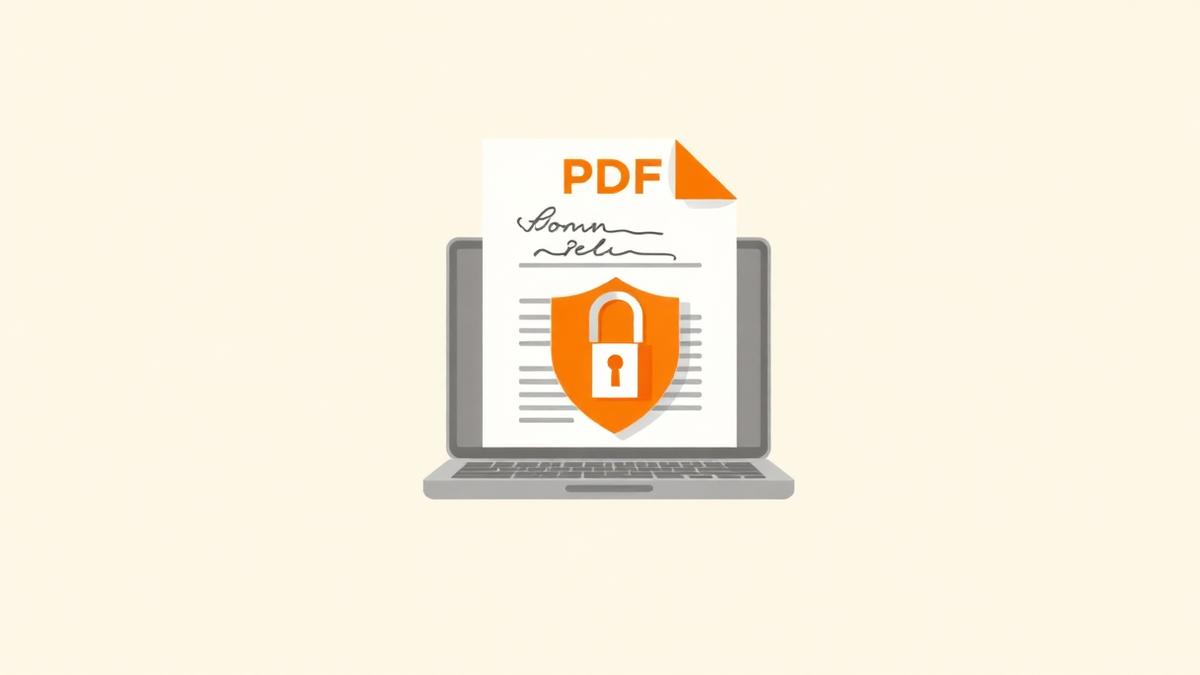
Signing a document online is now routine — a rental agreement, an offer letter, a consent form, a supplier contract. What is not routine is the amount of trust it quietly requires. This guide explains how to judge whether a signature or stamp tool deserves your confidential documents, and how to sign safely.
The one question that matters most
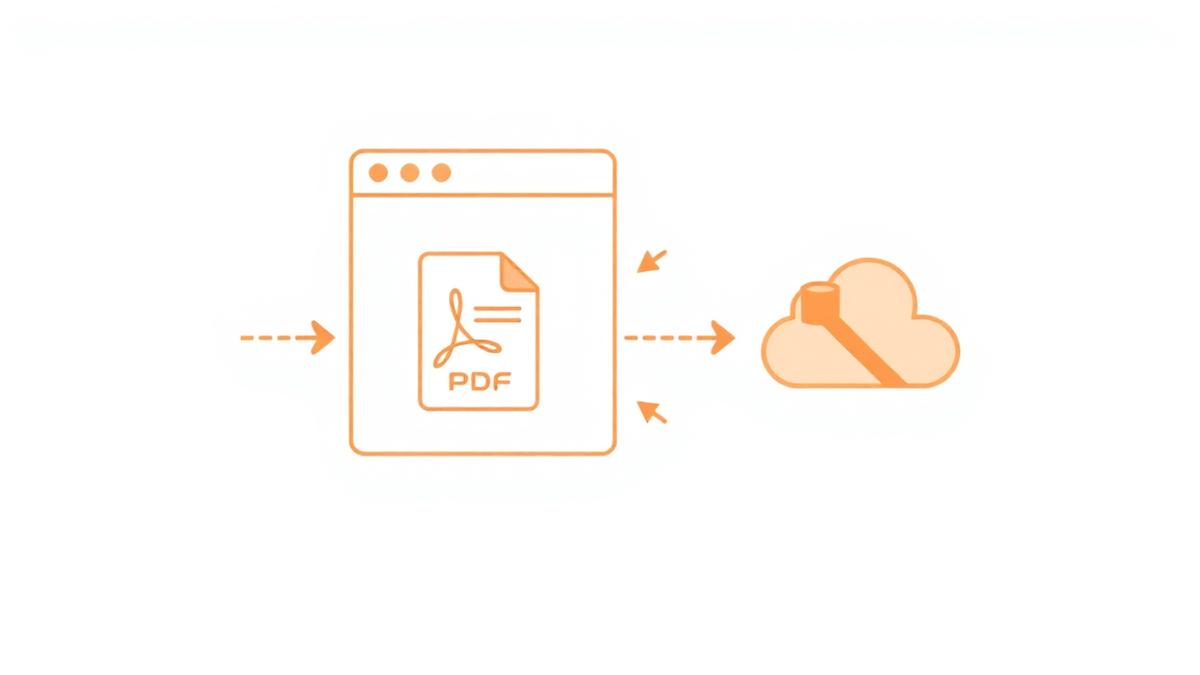
Before comparing features, ask: does my file leave my device? If the answer is yes, then everything else — the privacy policy, the retention window, the security badges — is a promise rather than a guarantee. Promises can be well intentioned and still fail.
If the answer is no, the question of retention disappears. A tool that never receives your document cannot store it, index it, or lose it.
Types of electronic signature
| Type | What it is | Typical use |
|---|---|---|
| Drawn or typed signature | A visual mark placed on the page | Internal approvals, everyday agreements, forms |
| Signature with audit trail | A visual mark plus a log of who signed and when | Commercial contracts between organisations |
| Digital certificate signature | A cryptographic signature bound to an identity | Regulated filings and high-value legal instruments |
PDFCraft's Sign PDF tool produces the first kind: a clear, correctly positioned visual signature applied entirely in your browser. That covers the large majority of everyday signing. For regulated filings that require a qualified certificate, use a certificate authority service.
Benefits of signing locally
- The document never travels, so there is no transmission to intercept and no copy to retain.
- No account, no email verification and no marketing follow-up.
- It works on a phone, which is where most people actually sign.
- It is instant — no upload progress bar on a 20 MB scan.
- Closing the tab clears the working state; only what you deliberately saved remains.
Step by step: signing a document safely
- Read the document first, in full. A signature tool should be the last step, not the first.
- Open Sign PDF and add your file. Processing happens in your browser.
- Create your signature by drawing it with a finger or mouse, typing it, or uploading a transparent PNG.
- Drag it onto the signature line, then resize and rotate until it sits naturally on the page.
- Add a date stamp if the document asks for one — the Stamp Creator handles dates, times and custom text.
- Zoom in and check the placement on the exact page before exporting.
- Download the signed file, name it clearly, and keep the unsigned original in your archive.
Real-world examples
The tenancy agreement on a phone
An agent emails a PDF and asks for it back today. Opening it on a phone, drawing a signature with a fingertip, placing it on the line and sending it back takes a couple of minutes — and the document never leaves the handset.
The internal approval stamp
A finance team approving purchase orders needs the same Approved stamp with today's date, dozens of times a week. Saving that stamp once and reapplying it in one click is far faster than redrawing it every time.
The consent form for a school trip
A form containing a child's name and medical notes is exactly the kind of document you should not upload to an unknown server. Local signing avoids the question entirely.
Common mistakes
- Signing before reading, because the tool made it easy.
- Emailing a scanned image of a signature that anyone can crop and reuse.
- Placing the signature on the wrong page in a long document and never checking.
- Overwriting the unsigned original, leaving no clean copy for a future amendment.
- Assuming a visual signature satisfies a rule that specifically requires a qualified certificate.
Best practices
- Sign the final version only, after merging annexes with Merge PDF.
- Include a dated stamp when the agreement depends on timing.
- Use a consistent filename pattern such as 2026-08-04-supplier-agreement-signed.pdf.
- Keep both the unsigned and signed copies; the pair is your record of what changed.
- For multi-party agreements, agree in advance who signs first and circulate one file, not three.
Summary
Safe online signing comes down to three things: read before you sign, know where your file is processed, and check the placement before you send. A browser-based tool removes the biggest unknown by keeping the document on your device — and for the everyday agreements most people sign, that is exactly the level of assurance required.
Frequently asked questions
- Is an electronic signature legally valid?
- In many jurisdictions electronic signatures are recognised for most everyday agreements, but requirements vary by country and document type. Some filings require a qualified digital certificate. Check the rules that apply to your specific document.
- Does PDFCraft store my signature?
- No. Signatures are created and applied in your browser. Anything you choose to save — such as a reusable stamp — is stored locally in your own browser storage, not on a server.
- Can I sign a PDF on my phone?
- Yes. Drawing a signature with a fingertip usually gives a more natural result on a phone than a mouse does on a desktop.
- What is the difference between signing and stamping?
- A signature represents a person's assent. A stamp conveys status or metadata — Approved, Paid, Confidential, or a date. Many documents need both.
- Can someone remove my signature from the PDF?
- A visual signature is part of the page content and cannot be peeled off casually, but it is not cryptographically bound to your identity. Use a certificate-based signature where tamper evidence is legally required.
- Should I upload confidential documents to sign them?
- Avoid it where you can. A tool that processes in your browser gives you the same result without transmitting the document at all.
Draw, type or upload a signature and place it exactly where it belongs — all in your browser.
Open Sign PDFAbout this article
- Written by
- PDFCraft Team
- Reviewed by
- PDFCraft Editorial Team
- Last updated
PDFCraft builds free, browser-based PDF tools. This guide reflects how our team works with documents day to day and is reviewed whenever the underlying tools change.